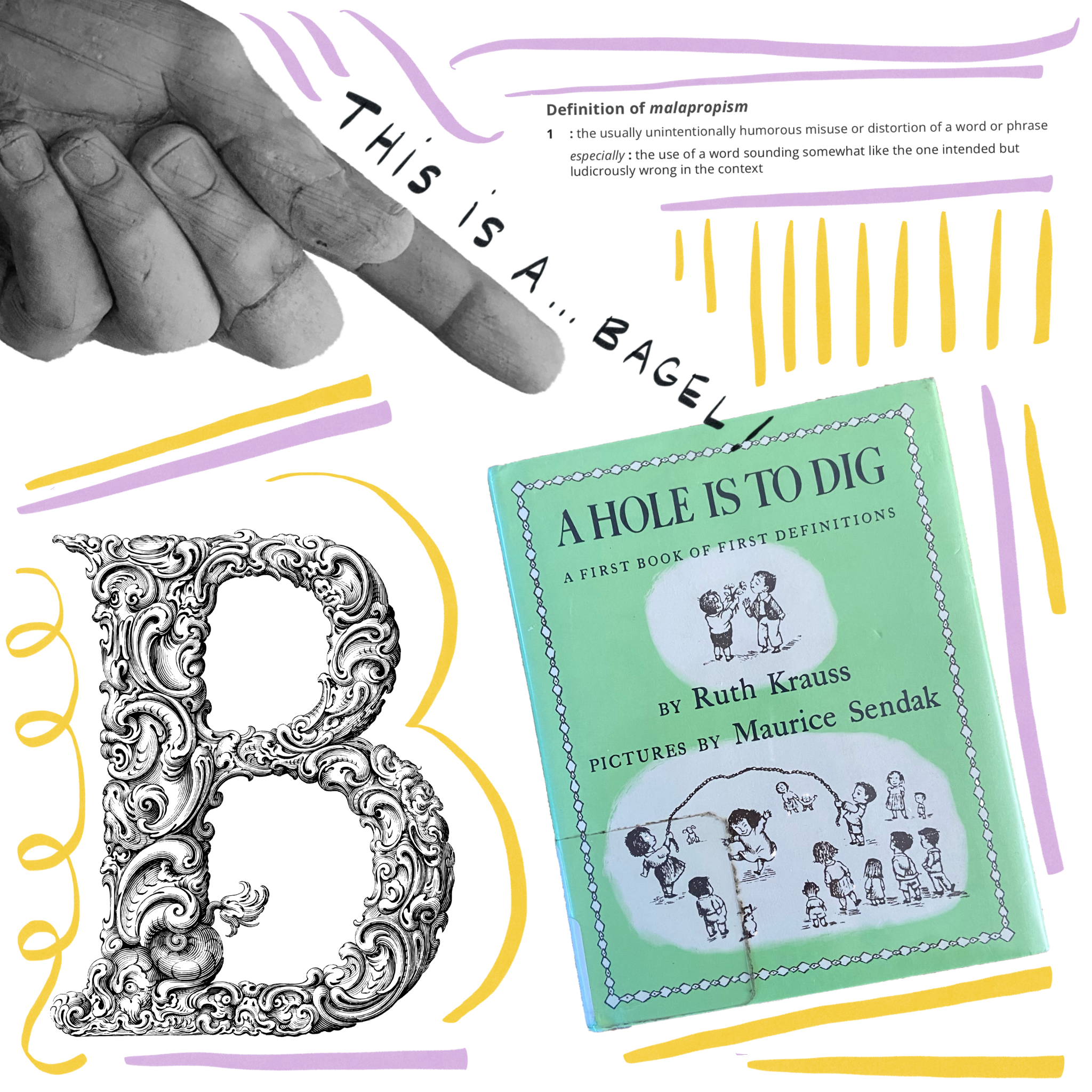
A Hole is to Dig: A First Book of First Definitions / By Ruth Krauss / Pictures by Maurice Sendak / HarperCollins, 1952
This book is the kind that I could read on repeat, just as a reminder to stay curious about the way I Define Things. A slim, square, pistachio-green thing. It fits snugly in the palm of my middle-aged hand; in a child’s hand, it spills over.
This book almost disappears on the library shelf! But it gives Merriam-Webster a run for its money.
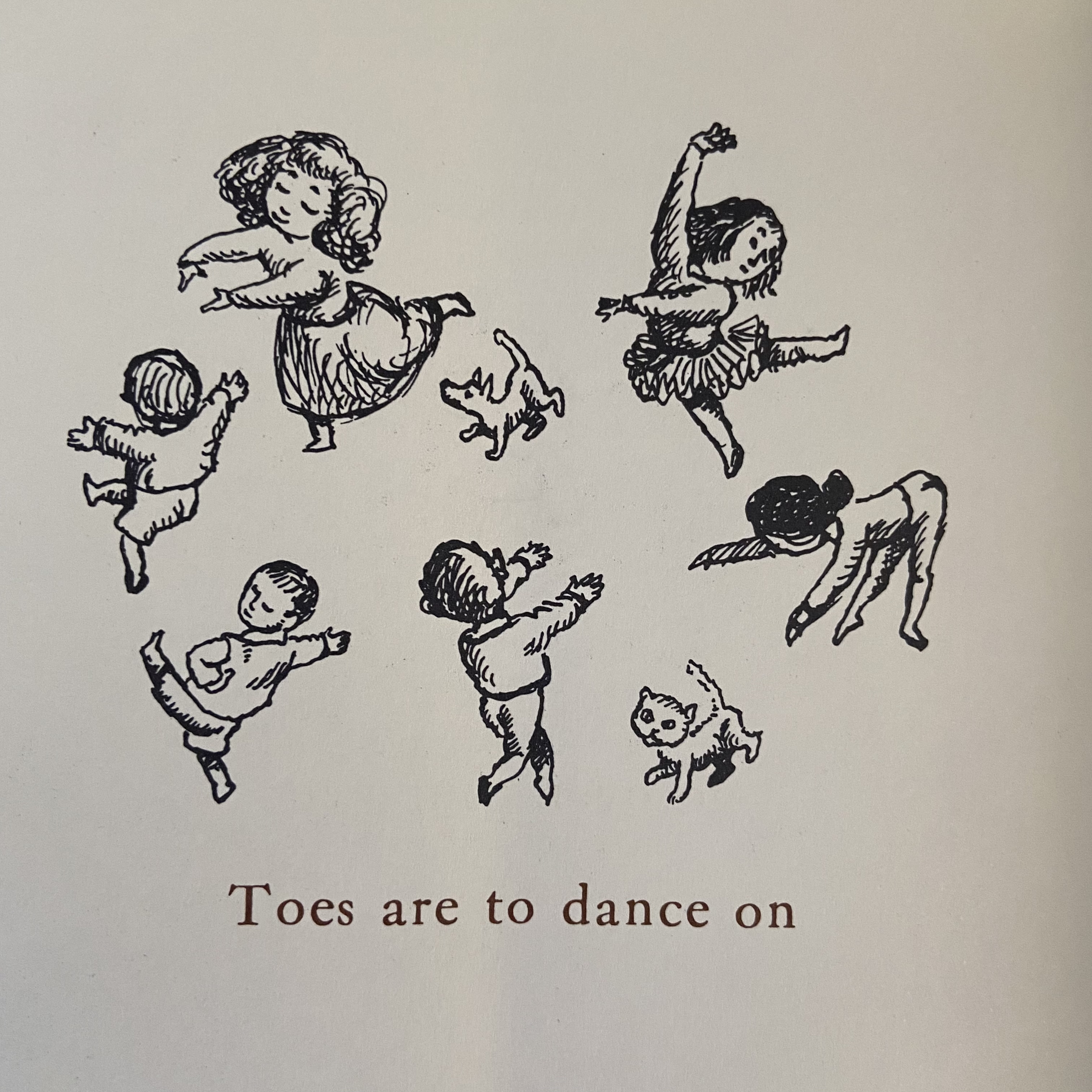
Ruth Krauss wrote this “First Book of First Definitions” in collaboration with children, who made suggestions, revisions, and additions. My current favorite: A floor is “so you don’t fall in the hole your house is in.”
Add Movement
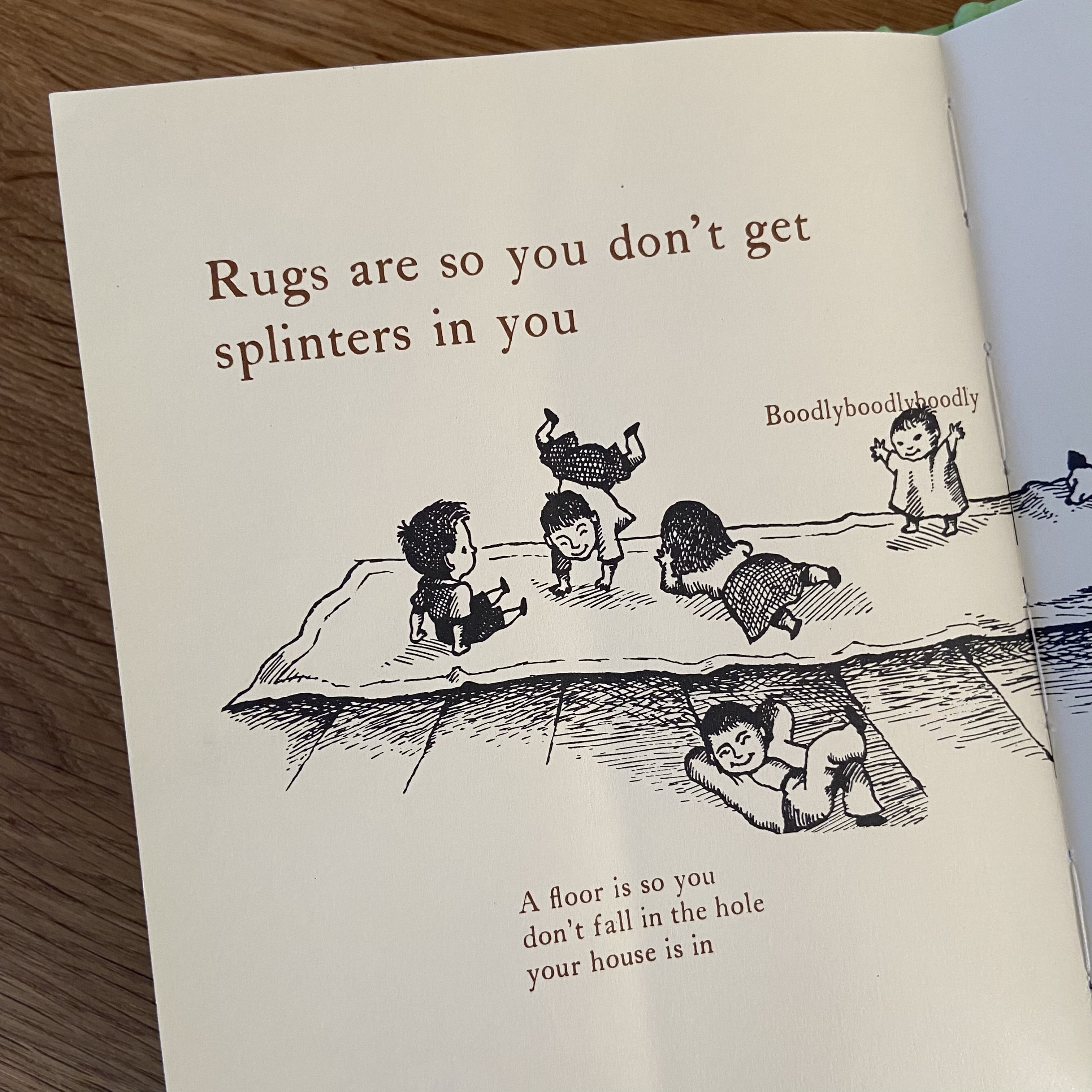
This book basically makes a movement class for you — just read, step out of the way, and see what the kids do. Maurice Sendak’ s illustrations offer endless inspiration for scrunching up noses, dancing on toeses, rolling in the snowses, planting roses, etc.
To get ready for digging in the garden (and/or making mashed potatoes for everyone), here’s one of my favorite hand aerobics moves:
Hold your hands out in front of you, and set a timer for 30 seconds. See how many ways you can interlace your hands and fingers for 30 seconds This combines a sensory awareness warm-up with a creativity challenge.
Add a Theater Game
In honor of expanding our definitions of things, let’s play the theater game Malapropism.
OK fine first we will use Merriam-Webster to look up malapropism.
malapropism (n): the usually unintentionally humorous misuse or distortion of a word or phrase especially : the use of a word sounding somewhat like the one intended but ludicrously wrong in the context.
Now for the game!
- Players walk around the room, point to different items, and say out loud what the item is not. You can say any word except what the item actually is! Examples: Point to a chair and say “popsicle!” Point to a light switch and say “unicorn!” Etcetera!
- For older players, to level up, or as a literacy warm-up: Point to an item and say a word that rhymes. Examples: Point to a chair and say “bear!” Point to a door and say “floor!” You could also try words with the same vowel sound (point to a desk and say “vest!”) or words that start with the same sound as the item (point to a chair and say “cheese!”).
- Variation: Point to an item and say a gibberish word that sounds similar. Examples: Point to a chair and say “shebair!” Point to a desk and say, “fresk!”
The second graders I tutor in reading and writing absolutely love this game. Try it and let me know what you think!
Coach Cristin is a teaching theater artist who uses movement as a tool to tutor young readers and writers. She’s also a Qualified Fletcher Pilates Teacher, and she teaches Pilates to both kids and adults. Most importantly, she’s a children’s literature superfan who feels most at home lying on a library floor covered in picture books.
 Coach Cristin